
Add your title here
This is the text area for this paragraph. To change it, simply click and start typing. Once you've added your content, you can customize its design by using different colors, fonts, font sizes and bullets. Just highlight the words you want to design and choose from the various options in the text editing bar.
This is the text area for this paragraph. To change it, simply click and start typing. After adding your content, you can customize it.
Replacing Teeth in a Way That Functions
Dentures in Scarborough for patients missing multiple teeth who need a restoration designed for daily oral function
The process of fabricating a denture that fits correctly and functions reliably across chewing, speech, and daily wear is considerably more involved than selecting a standard size from a catalog. Nathan Goff DMD provides full and partial dentures in Scarborough, with each restoration designed to fit the individual patient's ridge shape, bite relationship, and functional needs rather than conforming to a generic template. The difference between a well-fitted denture and a poorly fitted one shows up immediately in how the appliance distributes chewing force and how stable it remains during use.
Full dentures replace an entire arch of missing teeth and rely on the fit against the gum ridge and palate for retention. Partial dentures work differently: they are anchored to remaining natural teeth using clasps, which means the fit depends on both the ridge and the relationship to those anchor teeth. At Nathan Goff DMD, the approach for each type begins with an assessment of the existing ridge anatomy and remaining teeth before impressions are taken, because those baseline conditions determine how the denture will be designed and what adjustments to anticipate during the fitting process.
Request an appointment with Nathan Goff DMD to discuss your tooth replacement options and have your current oral condition evaluated as a starting point for the denture process..
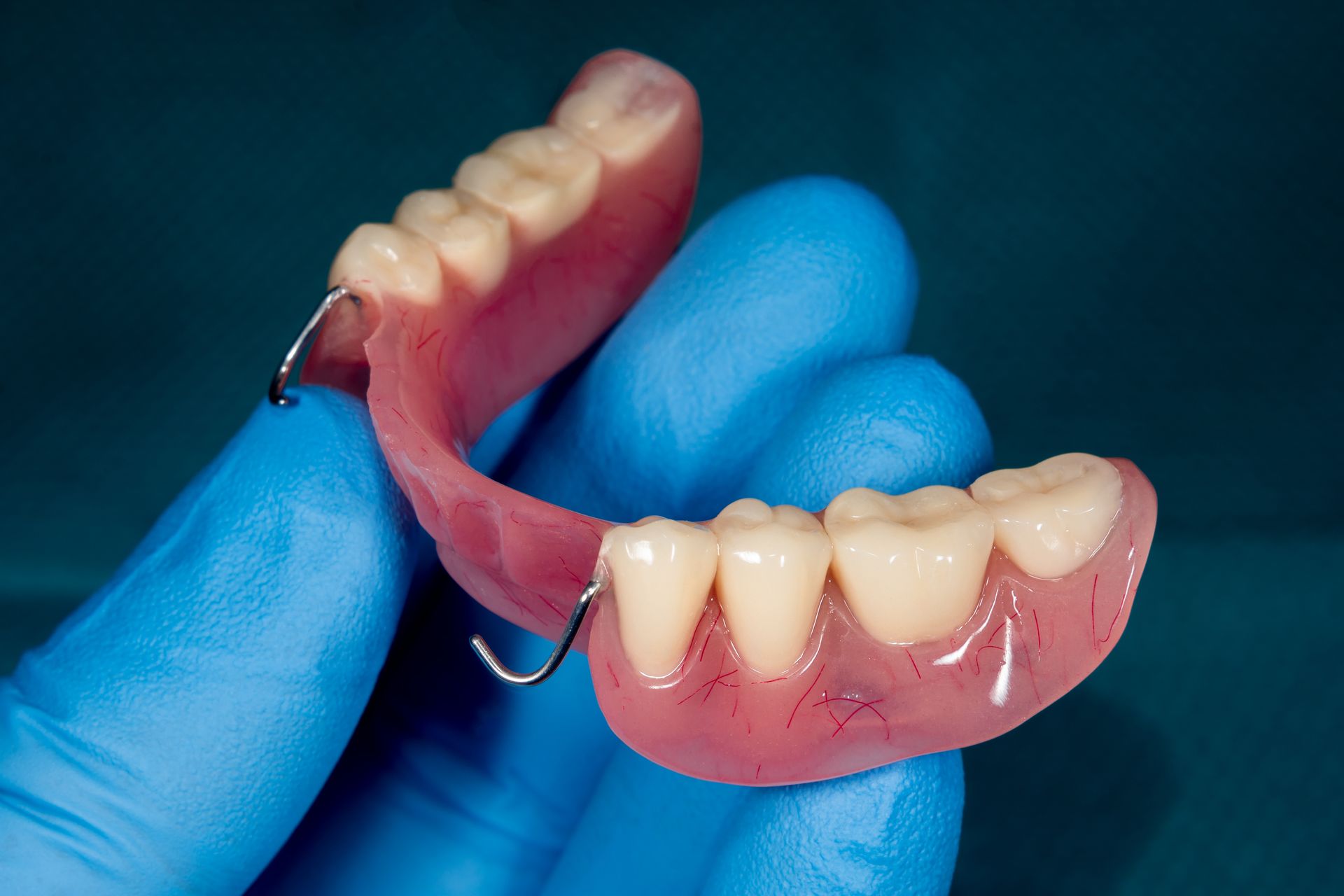
Custom denture fabrication follows a multi-step process because the mouth is not static. Initial impressions capture the ridge shape, but a try-in appointment allows the tooth positions and bite relationship to be evaluated before the final denture is processed—adjustments at the try-in stage are straightforward, while the same adjustments after processing require grinding or relining. At Nathan Goff DMD, denture adjustments are addressed as fit concerns arise, since new dentures routinely require minor refinements as the patient adapts to the appliance and the gum tissue settles.
Patients notice specific, functional changes once a well-fitted denture is in place: chewing on both sides of the mouth becomes possible again, speech patterns that shifted around missing teeth stabilize, and the facial support that tooth loss gradually removes is restored by the denture base. These are observable functional outcomes, not cosmetic impressions—they reflect whether the bite is correctly established and whether the appliance is properly supported by the ridge.
Over time, the ridge beneath a denture remodels, which is why fit changes and why periodic evaluation matters. A denture that fit correctly at delivery may feel loose years later not because the appliance has worn out but because the underlying bone has resorbed—a relining procedure adds material to the denture base to restore contact with the changed ridge, which is distinct from a full replacement..
Common Questions About This Service
The questions below address how dentures are designed, fitted, and maintained—with particular attention to what patients can expect at each stage of the process and what affects long-term fit and function.
What is the difference between a full denture and a partial denture in terms of how they are made?
A full denture derives its stability from contact with the gum ridge and palate, while a partial denture uses metal or flexible clasps anchored to remaining teeth—the fabrication process and the factors affecting fit are different for each type.
How many appointments does the denture process typically involve?
Most denture cases require several appointments: initial impressions, bite registration, a try-in to evaluate tooth position and occlusion, delivery of the finished appliance, and at least one follow-up adjustment—the number can vary based on how complex the bite relationship is and how the tissue responds.
Why does a new denture sometimes affect speech initially?
The palate and tongue rely on proprioceptive feedback from natural teeth and gum tissue to position sounds; a denture changes that feedback, and speech typically normalizes as the patient adapts to the new contact surfaces over days to weeks.
What should you do when a denture feels loose or rocks during chewing?
Rocking or instability most often indicates that the fit between the denture base and the ridge has changed due to bone resorption—an evaluation will determine whether a reline restores the fit or whether the denture has reached the end of its functional lifespan.
How does the construction era of a patient's prior dental work affect the denture planning process in Scarborough?
Patients who had extractions performed decades ago often present with significant ridge resorption, particularly in the lower arch, because bone volume diminishes progressively after teeth are removed—that resorption affects how much retention is achievable and what design options are appropriate for the case.
Nathan Goff DMD also provides dentures for patients in Westbrook, South Portland, and Portland. To begin the denture evaluation process and discuss which restoration type fits your situation, contact Nathan Goff DMD to arrange an initial appointment.