
Add your title here
This is the text area for this paragraph. To change it, simply click and start typing. Once you've added your content, you can customize its design by using different colors, fonts, font sizes and bullets. Just highlight the words you want to design and choose from the various options in the text editing bar.
This is the text area for this paragraph. To change it, simply click and start typing. After adding your content, you can customize it.
When Wisdom Teeth Require Evaluation and a Plan
Wisdom tooth evaluation and treatment in Scarborough for pain, crowding, or impaction identified before problems progress
Discomfort at the back of the jaw, pressure against neighboring molars, or swelling near a partially erupted tooth are the conditions that typically bring wisdom tooth concerns to the surface. Nathan Goff DMD evaluates wisdom teeth in Scarborough to determine whether they are erupting normally, partially impacted beneath the gum, or positioned in a way that is placing mechanical pressure on adjacent teeth. The evaluation gives you a clear picture of what is actually happening rather than a general recommendation based on age alone.
The assessment involves reviewing the position of each wisdom tooth in relation to the second molars beside them, the angle at which the tooth is growing, and whether there is sufficient space in the arch for the tooth to erupt fully without disruption. Radiographic imaging is a key part of this process because it shows the portion of the tooth still beneath the gumline, including whether the roots are near anatomical structures that would affect how extraction is approached or whether a referral to an oral surgeon is appropriate.
Arrange an evaluation with Nathan Goff DMD to assess your wisdom teeth and discuss the options that fit your specific situation.
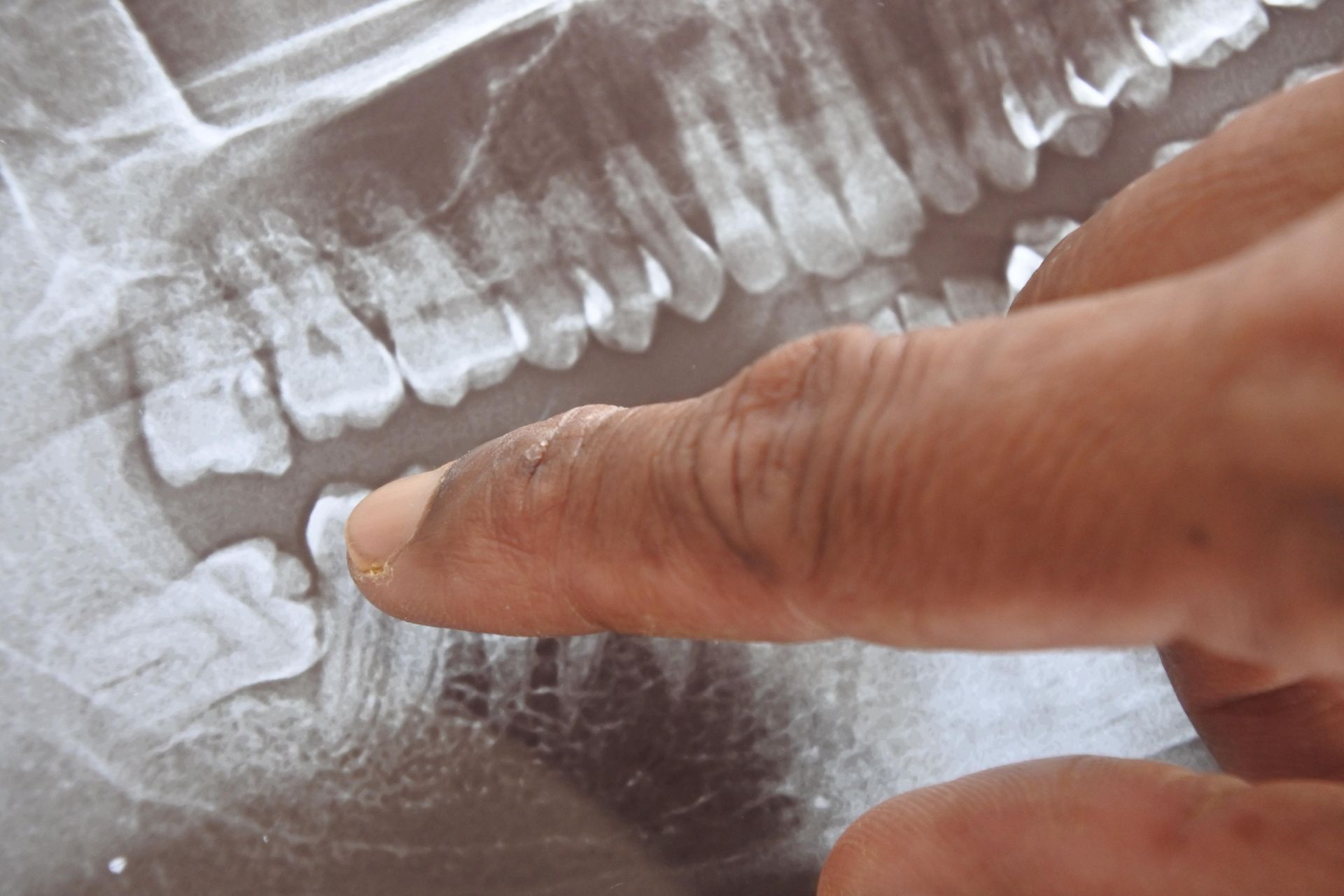
Not every wisdom tooth needs to be removed immediately, and not every case is the same. The evaluation at Nathan Goff DMD is structured to identify whether a tooth is causing active problems, likely to cause problems based on its trajectory, or stable enough to monitor over time. A tooth that is fully impacted and asymptomatic may be managed differently than one that has partially broken through the gum and is creating a site where bacteria accumulate beneath the flap of tissue covering it.
Once the evaluation is complete, the decision tree becomes clearer. Patients in Scarborough with wisdom teeth that have caused noticeable swelling, sensitivity, or a recurring bad taste near the back of the mouth often find that those symptoms resolve after the source of the problem is addressed — whether through extraction or treatment of the surrounding tissue. The evaluation itself does not commit you to any course of action; it gives you the information needed to make a decision.
When extraction is the appropriate recommendation, the discussion includes whether the procedure is one Nathan Goff DMD performs in the office or one that requires a referral based on the complexity of the tooth's position and root anatomy. Cases involving deeply impacted teeth or roots near the inferior alveolar nerve are typically referred to an oral surgeon, and that determination is made based on the imaging reviewed during your evaluation.
Common Questions About Wisdom Tooth Evaluation and Care
The questions below focus on how wisdom teeth are assessed, what the evaluation process involves, and what factors influence the treatment recommendation you receive.
What does an impacted wisdom tooth look like on an X-ray?
An impacted tooth appears below the gumline, often angled toward the adjacent molar, with the crown of the tooth partially or fully obscured by bone. The imaging also shows root length and proximity to nearby nerves, which are factors that shape the extraction approach.
How is a partially erupted wisdom tooth different from one that is fully impacted?
A partially erupted tooth has broken through the gum surface but has not come in completely, leaving a flap of tissue that can trap debris and become inflamed — a condition called pericoronitis that causes localized swelling and pain at the back of the jaw.
What happens during a wisdom tooth evaluation appointment?
The appointment involves a clinical examination of the area and a review of radiographic images to assess position, angulation, root development, and available space in the arch before any recommendation is made.
Why do some wisdom teeth cause pain while others never do?
Position and available space are the primary factors — a tooth with room to erupt fully may never cause symptoms, while one angled against the second molar places continuous pressure on surrounding bone and the adjacent tooth root.
How does the position of wisdom tooth roots affect what treatment is recommended?
Roots that are curved, unusually long, or positioned near the inferior alveolar nerve require more careful assessment, and cases where those anatomical relationships create significant surgical complexity are typically referred to an oral surgeon for extraction.
If you are experiencing discomfort, pressure, or swelling near your back molars, Nathan Goff DMD can evaluate the area and walk through what the imaging shows and what your options are from there.